
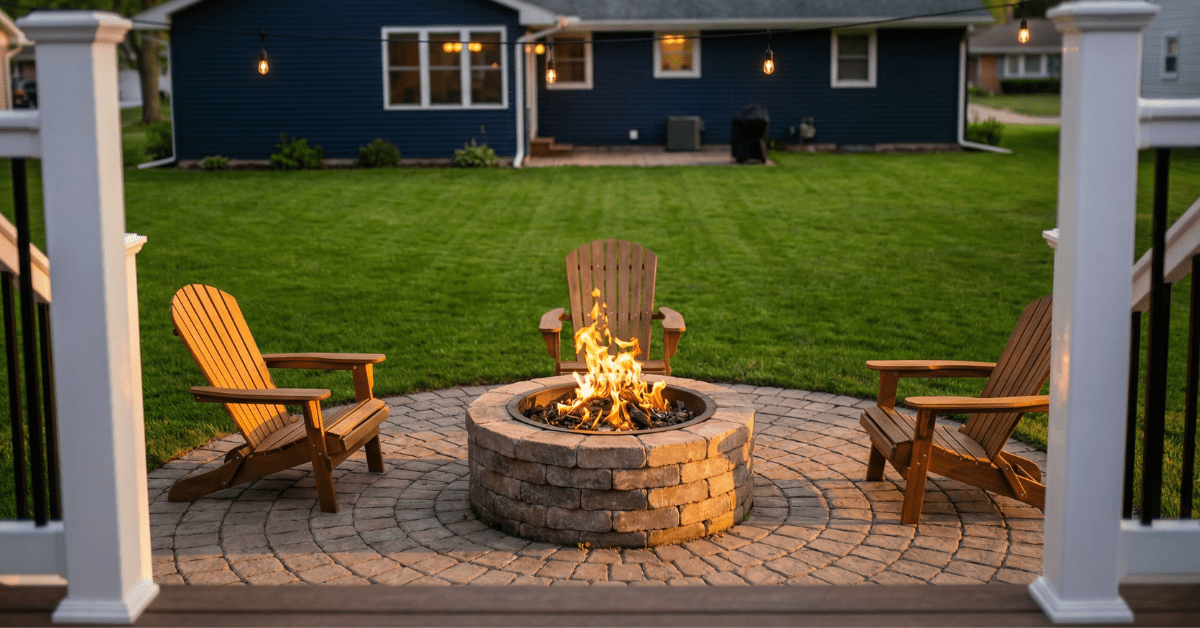
A backyard fire pit turns an ordinary evening into something memorable. But before the first spark flies, you need to answer one critical question — how far should a fire pit be from the house?
Get this wrong, and the consequences go well beyond a fine. Radiant heat warps siding. A single flying ember lands on dry wood and doesn’t stop. This guide gives you the exact distances you need, explains why they exist, and covers the variables that change the math.
The Short Answer: 10 Feet Minimum, 15–25 Feet Recommended
The widely accepted baseline is at least 10 feet between your fire pit and any structure or combustible material. That includes your house, garage, shed, wooden fences, and decks.
Most fire safety experts and insurance companies push that number higher. A buffer zone of 15 to 25 feet is the practical recommendation whenever your yard allows it. Fire behavior is unpredictable — a wind gust carries embers farther than you expect. More space gives you more margin.
10 feet is the floor — never go closer to any structure. Push to 15–25 feet for wood-burning setups whenever your yard has the room. When local codes and these guidelines conflict, always follow whichever number is greater.
What the NFPA Actually Says
The National Fire Protection Association sets the baseline for local fire codes across the country. Under NFPA 1 (Fire Code), outdoor fires should be located not less than 50 feet from any structure.
That sounds extreme for a backyard setup — and in practice, local authorities typically reduce it to the 10 to 25-foot range for smaller, contained recreational fires. But it’s worth knowing the full standard, especially if your yard is on the smaller side. When your jurisdiction adopts NFPA 1, they start from 50 feet and work down. Check with your local fire marshal to see exactly where they landed.
Wood-Burning vs. Gas Fire Pits: The Distance Changes
Not all fire pits carry the same risk profile. The fuel type matters a lot when you’re figuring out a safe distance for a fire pit from the house.
Wood-burning fire pits are the classic choice — but also the highest risk. Burning wood produces unpredictable sparks, flying embers, and thick smoke. The fire can flare up quickly, especially when wood is dry or the wind picks up. Wood-burning pits should always sit at the 15 to 25-foot end of the range. A heavy-duty metal spark screen is non-negotiable.
Gas and propane fire pits produce a consistent, controlled flame with zero sparks and virtually no airborne embers. That reduced risk means a minimum of 7 to 10 feet is generally acceptable. Some manufacturers specifically design gas fire tables for covered patio use — but always verify against your product’s manual and local codes before assuming that applies to your unit.
| Fire Pit Type | Minimum Distance | Recommended Distance | Key Risk Factor |
|---|---|---|---|
| Wood-Burning | 10 feet | 15–25 feet | Flying embers, unpredictable flare-ups, smoke |
| Gas / Propane | 7–10 feet | 10 feet | Radiant heat only — no sparks or embers |
Don’t Forget to Look Up: Vertical Clearance
Homeowners focus almost entirely on horizontal distance and forget the space above the fire. That’s a costly mistake.
Heat rises fast. A low-hanging tree branch, a wood pergola, or a patio awning sitting over a fire pit dries out over time. Brittle, dried-out material can ignite from radiant heat alone — no direct spark needed.
The standard rule is at least 21 feet of open vertical space above your fire pit. For wood-burning units, don’t place the pit under any overhead structure, period. For gas units, manufacturer specs vary — some approve covered patio use with adequate ventilation and ceiling height. Always verify before you install.
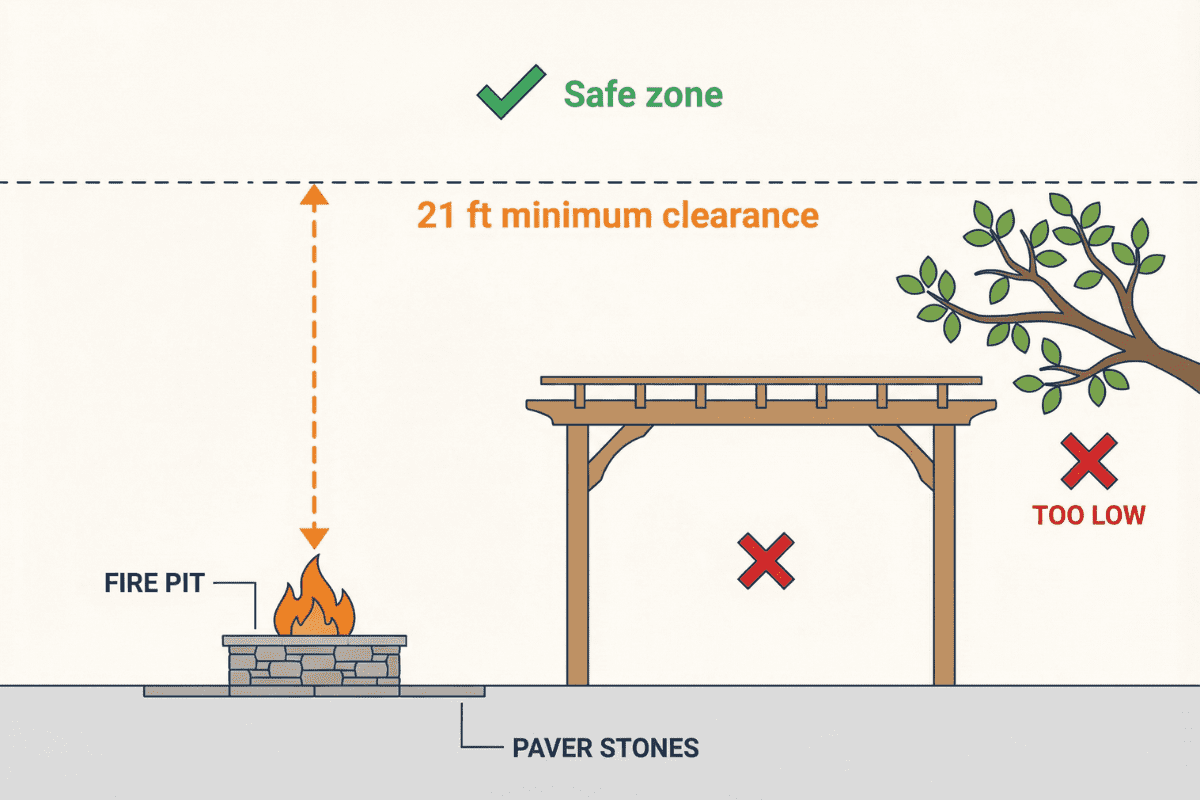
Mature tree canopy also needs careful consideration. Branches at 15 feet overhead look harmless until embers start floating upward on a warm evening.
Safe Surfaces and the Deck Question
Getting the right distance from the house won’t protect you if the fire pit is sitting on a flammable surface. The best base materials are non-combustible:
- Poured concrete
- Brick or stone pavers
- Pea gravel or crushed rock
- Decomposed granite
Never place a wood-burning fire pit directly on a wooden or composite deck. Radiant heat warps composite material and can ignite dry wood. One escaped ember on a wood deck turns into a serious incident fast. If you’re committed to a deck setup, use a gas or propane model and place a deck-rated fire pit heat shield underneath it. Our fire pit on decking guide covers the material choices and exact spacing requirements that make it work safely.

Grass and lawn areas aren’t the same hazard that decks are, but sustained heat kills the turf and leaves a permanent scorched circle. A paver base or heat shield protects the lawn and creates a more stable surface.
Local Codes and HOA Rules Always Win
General guidelines give you a starting point. Local law has the final word.
A 2026 analysis of fire pit regulations found that 20 states require some form of permit for fire pits, and 15 states have open burning bans that effectively prohibit wood-burning fire pits in many areas. The average required setback mandated by local laws is 23 feet — already higher than the commonly cited 10-foot minimum.
City and county fire codes. Many municipalities require a permit for a permanent fire pit. In wildfire-prone areas and regions with poor air quality, seasonal burn bans are common. Wood-burning fires are typically prohibited during these periods. Gas fire pits are usually exempt.
HOA bylaws. Your city may allow fire pits while your HOA bans them entirely. Many associations prohibit wood-burning fire pits while permitting propane or natural gas alternatives. Check your covenants before spending a dime.
Contact your local fire marshal’s office directly. They’re typically happy to answer placement questions and can give you the exact setback distances for your jurisdiction in one phone call.
How Fire Pit Distance Affects Homeowners Insurance
A fire pit introduces new liability. Most standard homeowners policies cover fire pits under the dwelling or personal property sections, and the liability portion covers guest injuries or neighbor property damage in most cases.
Notify your insurance agent before installation. Some insurers require specific safety measures — like a spark screen or a minimum setback distance from the house — to keep your coverage intact. A permanent fire pit that goes undisclosed can complicate future claims in ways that are genuinely painful to deal with after the fact.
5 Safety Habits Worth Making Permanent
Beyond distance and placement, a few consistent habits separate safe fire pit use from avoidable accidents. For the full breakdown — including emergency equipment and extinguisher ratings — see our complete fire pit safety tips guide.
-
1
Check the Wind Before You Light Gusts over 10 to 15 mph carry embers well beyond your clearance zone. Wind is the biggest threat to a wood-burning fire. If it’s blowing hard, wait for a calmer evening.
-
2
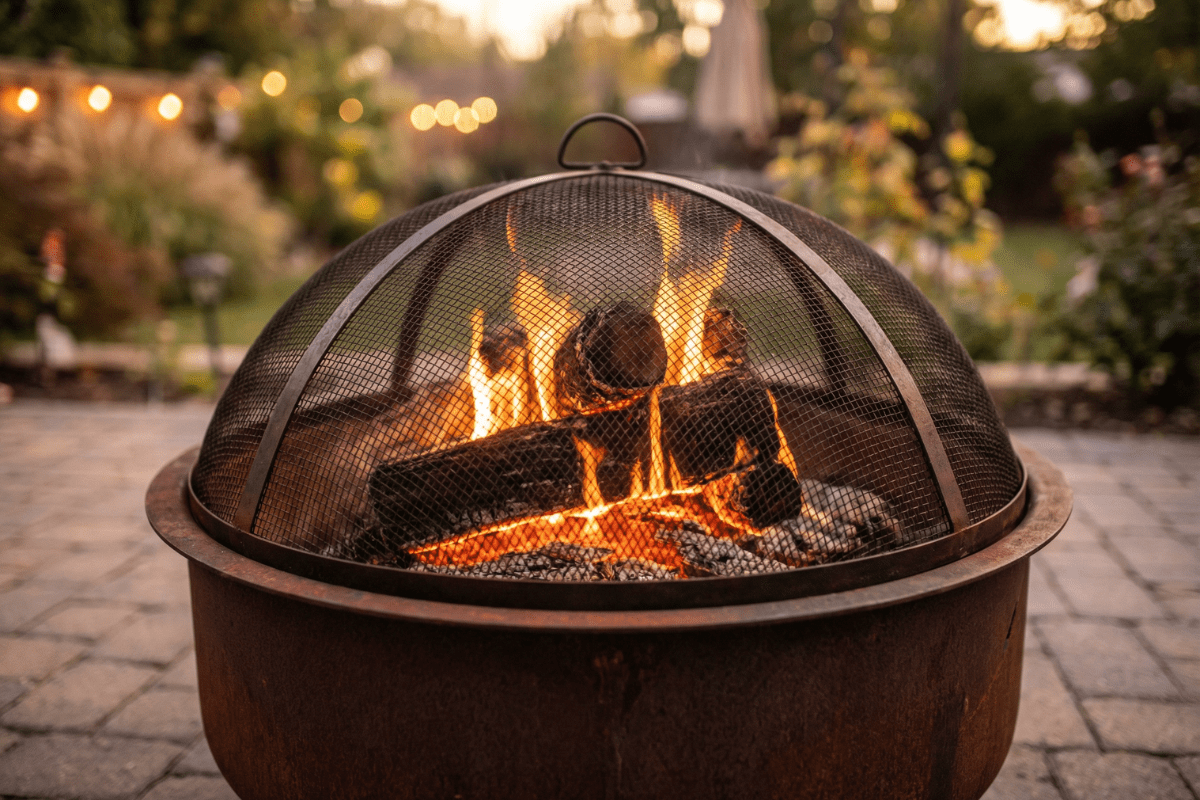
Keep a Spark Screen on the Pit For wood-burning fires, a metal spark screen is the single most effective tool for containing popping embers. Use it every time — no exceptions.
-
3
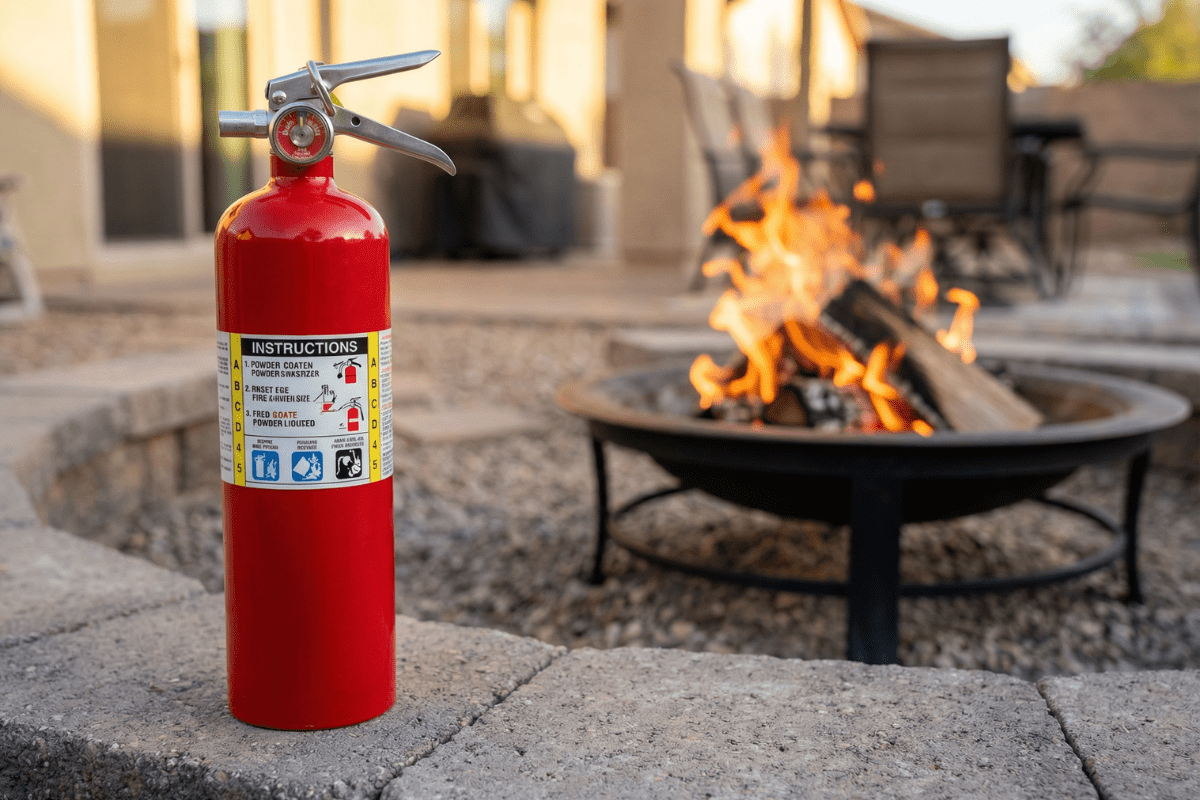
Have an Extinguishing Method Within Reach A garden hose, bucket of sand, or ABC-rated fire extinguisher should always be nearby. Within 20 feet is the practical standard for quick access during a burn.
-
4
Extinguish the Right Way Don’t dump water all at once — that creates a hardened ash crust over smoldering coals. Spread the ashes, apply water gradually with a fog-setting nozzle, stir thoroughly, and confirm nothing is still hot before walking away.
-
5
Never Use Accelerants Gasoline, lighter fluid, and kerosene cause unpredictable, violent flare-ups. Use proper fire starters and dry, seasoned hardwood for wood-burning pits every single time.
Ten feet is the absolute floor — never go closer to any structure. Push it to 15 to 25 feet for wood-burning setups whenever your yard has the room. Confirm 21 feet of overhead clearance. Verify your local codes, check your HOA, and loop in your insurance agent before the first stone gets laid.
Get those fundamentals right, and every night by the fire can be exactly what it’s supposed to be — relaxing, safe, and something your family comes back to again and again.